Disc Pain
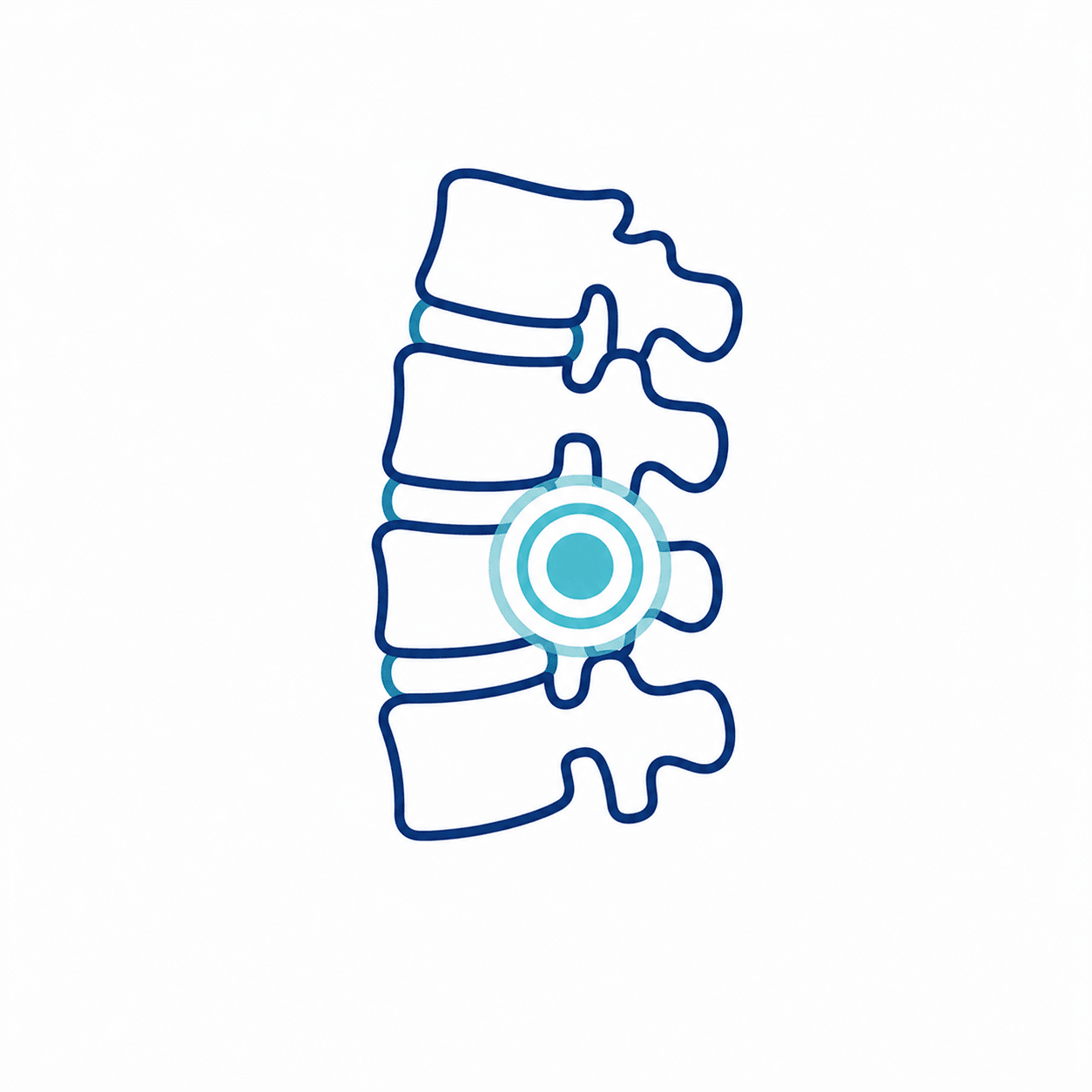
Why it happens & what actually helps
Disc pain can be one of the most intense and unsettling types of back pain.
You bend forward to pick something up and feel a sudden, sharp catch. Or you twist awkwardly and immediately sense pain radiating into the hip or leg. Sometimes it builds slowly — a deep ache in the lower back, stiffness in the morning, or a pulling sensation down the leg — and other times it arrives suddenly, leaving you guarded, sore, and worried something serious has happened.
At Blue Sky Chiropractic here in Hamilton, this is a very common story. And it often leads to the same question: “Is this a disc problem — and how long will it take to heal?” To answer that properly, we need to look at how discs work, why they become sensitive, and what actually helps them recover.
Disc pain is common — and most cases recover well
Your spinal discs act like shock absorbers between the vertebrae. They allow movement, distribute load, and help your spine adapt to bending, lifting, twisting, and everyday life.
Disc irritation can happen when:
Bending or lifting awkwardly
Sitting for long periods
Twisting under load
Experiencing a sudden force or strain
Going through a period of stress, fatigue, or reduced movement
Common disc-related presentations include:
Localised lower-back pain
Pain referring into the hip or buttock
Sciatica-type symptoms
Pain worse with sitting
Pain worse in the morning
Pain with bending forward
The reassuring part? Most disc injuries are not dangerous and recover well with the right approach.
Pain ≠ damage (and why disc pain feels so intense)
Disc pain can be sharp, deep, or radiating — but intensity doesn’t equal danger.
Research shows:
Many people with no pain have disc bulges or herniations on MRI — it’s not uncommon to see these findings even in people who feel perfectly fine
Disc changes can occur without symptoms
Pain is influenced by inflammation, muscle tension, stress, and nervous-system sensitivity
Avoiding movement can prolong symptoms
Disc irritation often triggers protective muscle spasm. This can make the back feel “locked,” “weak,” or “unstable,” even when the disc itself is healing. And importantly: Stress amplifies disc pain.
When life gets busy or overwhelming, your nervous system becomes more sensitive. This can make disc-related pain feel sharper, more reactive, or more widespread.
Why disc pain sometimes becomes recurrent
Disc pain tends to return when the underlying capacity of the spine hasn’t improved.
Pain may settle, but if:
Core and hip muscles fatigue quickly
The lower back remains stiff or irritated
Sitting loads stay the same
Stress levels stay high
Movement confidence is low
…then symptoms often flare again during busy or demanding periods. Effective care focuses not just on relief, but on restoring movement, strength, and adaptability.
Why rest alone usually isn’t the answer
When disc pain strikes, many people instinctively lie down, avoid bending, or rely on short-term relief like pain medication. While rest and medication can help take the edge off, they don’t usually address the underlying reasons symptoms keep returning.
Relying on rest or painkillers alone can lead to:
More stiffness
Increased sensitivity
Reduced confidence in movement
A cycle of temporary relief without long-term change
Medication can absolutely play a role — especially during a bad flare — but it works by reducing symptoms, not by improving the mechanical, postural, or stress-related factors that often drive disc pain.
Most people recover faster when they combine short-term relief strategies with the right kind of movement, reassurance, and targeted care.
How a chiropractor at Blue Sky Chiropractic can help with lower disc pain
At Blue Sky Chiropractic, we take a thorough and personalised approach to disc pain. Your first visit includes a detailed assessment to understand what’s driving your symptoms — looking at posture with thermographic imaging, whole-spine movement patterns, lower-back and pelvic function, nerve tension, joint motion, muscle balance, lifestyle factors, and stress load.
From there, we create a tailored programme of care designed around your goals, preferences, and comfort level. This may include gentle chiropractic adjustments or firmer, more hands-on manual adjustments (we offer a range of techniques to suit different needs), muscle-release work, nerve-mobility exercises, core retraining, and a structured plan of home exercises to support your recovery.
If appropriate, we can also refer you for further investigations — such as X-rays or an MRI scan — to gain more clarity and ensure you receive the right care at the right time.
Our aim is simple: to help you move better, feel better, and adapt more effectively to the stresses of daily life.
Three great exercises for disc pain
If anything causes sharp or worsening pain, stop and seek guidance.
1. McKenzie Extensions — Reduce disc irritation
How to do it:
Lie on your stomach
Prop up onto your elbows
Hold for 5–10 seconds
Repeat 8–10 times
Why it helps: It reduces pressure on the disc and calms nerve irritation.
2. Cat-Camel — Restore gentle spinal mobility
How to do it:
Start on hands and knees
Arch your back gently
Then round your back
Move slowly and smoothly
Repeat 10–12 times
Why it helps: It reduces stiffness and improves confidence in movement.
3. Glute Bridge — Build hip and core strength
How to do it:
Lie on your back with knees bent
Lift your hips toward the ceiling
Hold for 2–3 seconds
Lower slowly
Repeat 10–12 times
Why it helps: It strengthens the glutes and core, reducing strain on the lower back.
What else helps disc pain recover faster?
Staying active within tolerance
Regular movement breaks during sitting
Consistent sleep routines
Managing stress and emotional load
Gentle walking
Avoiding long periods of sitting or slumping
Clear guidance and reassurance also play a major role in recovery.
When should you get your disc pain checked by a chiropractor?
Most disc pain settles well, but you should seek professional assessment if:
Pain isn’t settling after 1–2 weeks
Pain spreads into the leg
You feel weakness, numbness, or tingling
Pain interferes with work, sleep, or daily life
You’re unsure what’s causing it
Early reassurance and the right plan can make a significant difference — and this is exactly where chiropractic care can help.
The bottom line
Your spine is resilient, adaptable, and designed to move — even when disc pain makes it feel otherwise.
Most disc-related pain recovers well with the right combination of movement, reassurance, and guidance. Chiropractic care can help you understand what’s going on, calm things down, and restore better balance and ease through your spine and nervous system.
If disc pain is interfering with your work, sleep, or daily life, we’re here to help.
Blue Sky Chiropractic, Hamilton - helping you move with confidence again.
Contact Blue Sky Chiropractic
Opening Hours | ||
|---|---|---|
Monday | 8:30am | - 6pm |
Tuesday | 2pm | - 6pm |
Wednesday | 8:30am | - 6pm |
Thursday | 9am | - 1pm |
Friday | 8:30am | - 6pm |
Phone: 07 808 6144
Email: the.team@blueskychiropractic.co.nz
Address: 87 Church Road, Trinity Heights Business Park, Pukete, Hamilton

